According to the Residential Tenancies Act 2010 (NSW), both landlords and renters in New South Wales have particular rights and obligations, when a tenancy ends. End of lease cleaning is a frequent source of controversy in the state. Understanding what the law needs versus what is expected will help tenants protect their bond and landlords keep their property free of avoidable problems.
When disagreements emerge, they are generally caused by misunderstandings about, how clean the property must be at the end of a tenancy and what is legally enforceable. This article goes into the key rules, rights and obligations that govern end of lease cleaning in the state of New South Wales, offering clarity for both renters and landlords. Understanding the guidelines for budget end of lease cleaning Sydney, can mean the difference between a simple bond refund and a long drawn out dispute. By the end, you’ll know exactly what the law requires and what it doesn’t.
- What the Law Says About Cleaning Obligations
- Tenant Responsibilities at the End of a Lease
- Landlord and Real Estate Agent Responsibilities
- Common Areas of Dispute
- Professional Cleaning: When Is It Necessary?
- Resolving Cleaning Disputes
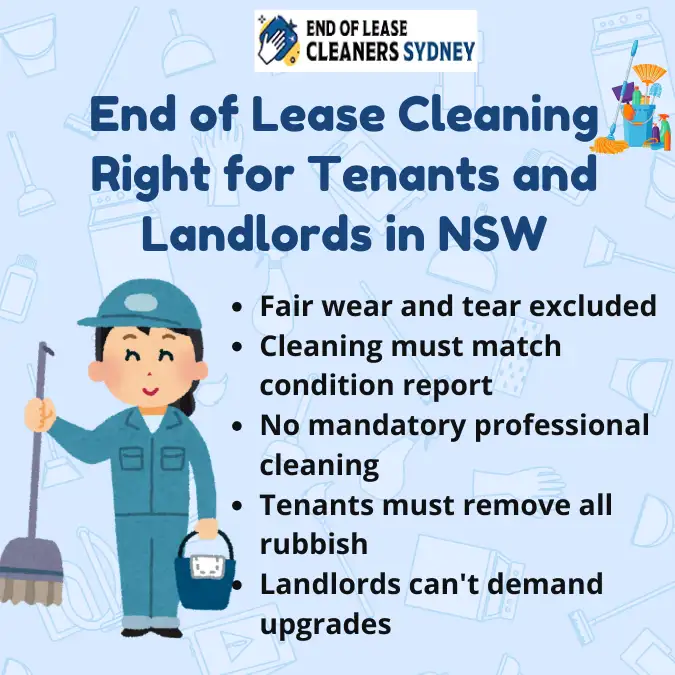
- Infographic: End of Lease Cleaning Right for Tenants and Landlords in NSW
- Wrapping Up
1. What the Law Says About Cleaning Obligations
The Residential Tenancies Act of 2010, establishes the foundation, for cleaning requirements in NSW. The legislation compels tenants to leave the property in a "reasonably clean condition" based on its condition, at the start of the tenancy. Importantly, the law does not force tenants to return the home in brand new condition, nor does it need professional cleaning, unless specifically stated in the leasing agreement under fair circumstances.
For example, a carpet cleaning clause is only enforceable if pets were kept on the property or if the tenant themselves agreed to it in writing. Even so, landlords cannot require tenants to select a certain cleaner or cleaning service. Many tenants choose to go with, guaranteed end of lease cleaning Sydney services, to ensure the property meets needed standards, providing peace of mind and helping to secure the bond.
2. Tenant Responsibilities at the End of a Lease
Tenants are responsible for leaving the house in a state that allows the landlord to renew the lease without unreasonable delay. This usually includes:
- Vacuuming and mopping floors
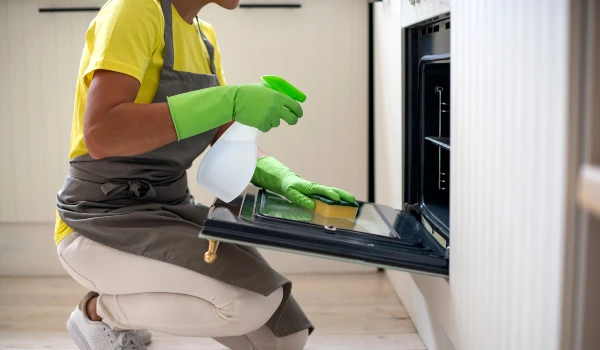
- Cleaning kitchen surfaces, ovens and stovetops
- Wiping down bathroom fixtures and tiles
- Removing rubbish and personal belongings
- Ensuring windows, walls and doors, are free of obvious marks or damage
While professional cleaners are frequently hired for convenience, tenants can lawfully do the cleaning themselves if the results meet the "reasonably clean" requirement. Tenants should also check the condition report, created at the start of the tenancy, since it acts as a guideline for how the property should be returned.
3. Landlord and Real Estate Agent Responsibilities
Just as tenants must fulfil their duties, landlords and property managers have responsibilities too. They cannot expect the property to be returned in a condition better than when the tenancy started. If the property was not professionally cleaned at the outset, they cannot demand professional cleaning upon exit.
Landlords are also prohibited from making unreasonable deductions from the tenant’s bond. Any cleaning related claim must be supported by evidence, such as photographs, invoices or comparison, with the original condition report. If challenged, these claims can be reviewed by the NSW Civil and Administrative Tribunal (NCAT).
4. Common Areas of Dispute
Despite clear standards, cleaning disputes continue to be one of the leading reasons of bond delays in New South Wales. Typical difficulties include:
- Carpets: Landlords often expect steam cleaningbut unless pets were present, this cannot be enforced.
- Ovens: These are frequently overlooked, by tenants but are closely inspected, by agents.
- Bathrooms: Mould and soap scum can cause disputes if tenants fail to clean them properly.
- Windows and blinds: While tenants must remove dust and grime, landlords cannot ask for professional blind cleaning to be done unless absolutely essential.
Tenants should take time stamped images after cleaning, to protect themselves from future disagreements. For those renting in urban locations, booking professional end of lease cleaning Sydney services, might be an expedient approach to address all potential issue areas.
5. Professional Cleaning: When Is It Necessary?
In NSW, professional cleaning isn't automatically required at the end of a tenancy, but it may be necessary or advisable in certain cases such as when the lease specifies it due to pets or smoking, if specialised cleaning (e.g. carpets, upholstery, pest control) is needed, or if the tenant can't meet the required standard. While it may cost more upfront, professional cleaning can help tenants secure their full bond and is often a worthwhile investment for landlords between tenancies to present the property in its best condition, even if the cost can't be passed on to the outgoing tenant.
6. Resolving Cleaning Disputes
When disagreements about cleanliness arise, the first step should always be communication. Tenants and landlords should attempt to resolve the issue informally, referencing the condition report and photographs. If no agreement is reached, either party can apply to NCAT for a determination.
The tribunal considers evidence from both sides and decides whether bond deductions for cleaning are justified. Tenants who can show that the property was left reasonably clean, are often successful in defending their bond. On the other hand, landlords with strong evidence of neglect may be entitled to claim cleaning costs.
Infographic: End of Lease Cleaning Right for Tenants and Landlords in NSW
Wrapping Up
End of lease cleaning in NSW is governed by clear principles designed to protect both tenants and landlords. Tenants must leave the house in a reasonably clean condition, while landlords cannot demand more than what the law allows. By understanding these rules and preparing with condition reports, photos and, where appropriate, professional cleaners both sides can avoid unnecessary disputes and ensure a smoother transition at the end of a tenancy.