A garage is one of the most important yet overlooked areas of your home’s exterior. It requires routine cleaning to prevent the buildup of dirt, grime, and grease, as well as mould infestation, especially on the floorings.
Garage floors are usually rugged, ensuring consistent wear and tear. They witness stubborn oil marks, buildup grease, moisture growth and even fog in the winter, which may cause permanent damage to the surface. Over time, this area becomes dull, stained and even hazardous if left untreated. In such a scenario, simple mopping doesn’t work!
Fret not! Here is a comprehensive guide to help you remove oil stains, grease and buildup grime from your garage floors like a pro. However, if you are at the end of your lease, book end of lease Sydney experts and leave a great impression on your landlord. They can help you pass inspection without any dispute or unfair bond deductions. For DIY tips, keep on reading the guide and transform your dull floors into a spotless concrete surface.
- Why is it important to clean the garage floor?
- Prep the Floor: Get Rid of Junk
- Remove Loose Debris and Dirt
- Remove Oil Stains Using Baking Soda
- Naturally Degrease Your Garage Floors
- Use Vinegar to Tackle Rust Stains
- Eliminate Paint Stains Using Rubbing Alcohol
- Hire Experts for Pressure Washing
- Infographic: How to Clean Garage Floors Naturally?
- Wrapping Up
1. Why is it important to clean the garage floor?
For many homeowners in Sydney, a garage is more than a parking area; it’s a pathway to the luxurious and beloved car. So, ensure you maintain its floor. Here are some of the key reasons why cleaning is important:
Avoids Long Term Surface Damage: Oil drips, snow salt, leaked brake fluid, etc, not only leaves nasty stains on the surface, but also causes dullness to the concrete floor. Over time, the floor can break down, leading to flaking, cracks and costly repairs. Removing oil stains protects the surface for years.
Prevents slips and falls: A dirty garage floor is potentially hazardous for slips and falls. Oil splatters and grease create slip hazards during rainy seasons. Cleaning eliminates these risks.
Maintains Hygiene Level: A clean garage floor means preventing the spread of lethal germs and bacteria. This also helps you leave a great impression on your landlord when moving out.
2. Prep the Floor: Get Rid of Junk
Eliminating garage junk should be your first step towards your floor cleaning process. Make sure you remove everything from your floor. First, park your car and other tools outside the garage. Remove all the distractions to easily address dirt and grime.
After that, get rid of unwanted items and trash. Carefully dispose of waste to prevent landfill waste. You can even recycle items to protect your environment.
3. Remove Loose Debris and Dirt
Make sure you thoroughly sweep the floor to remove dirt, dust, pebbles and other debris. Use a stiff bristled broom and make sure you get into nooks and crannies, as well as shelving units, to remove hidden grime. This is how you prep a floor for intensive scrubbing.
4. Remove Oil Stains Using Baking Soda
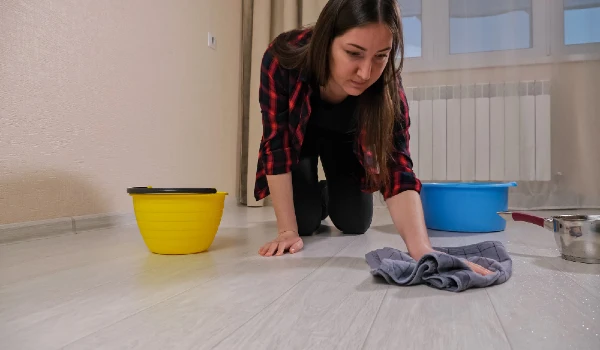
Oil stains not only damages your concrete floors but also require a lot of elbow grease to eliminate them. End of lease cleaning Sydney professionals recommend using baking soda and dish soap to remove stubborn oil stains.
First things first! Sprinkle a generous amount of baking soda over the affected area and add a few drops of dish soap liquid. Leave it for at least 30 minutes before scrubbing with a brush. Gently brush in a circular motion to remove the stains.
Ensure you rinse thoroughly with water and let the surface dry. You can repeat the method until you achieve the desired results.
5. Naturally Degrease Your Garage Floors
There is no denying that the buildup of grease on garage floors is the most challenging thing to remove. Stress not! You can use a natural DIY degreaser mix to retrieve the pristine shine.
Mix half a cup of vinegar with warm water in a spray bottle, then add a few drops of dishwashing liquid. You can also use castile soap and apply it to the affected area. Leave it for a few minutes and scrub gently. Now add a tablespoon of baking soda and scrub again. Rinse and dry your floor!
6. Use Vinegar to Tackle Rust Stains
This DIY method can do wonders in removing rust stains from your concrete garage floors.
Mix lemon juice and white vinegar directly onto the rust stain, then let it sit for 10 minutes. Next, scrub with a wire brush and rinse with water. Vinegar is one of the best non toxic cleaning solutions that can cut through rust stains effectively without causing any damage to the surface.
7. Eliminate Paint Stains Using Rubbing Alcohol
You can dab the paint stain with rubbing alcohol and scrape the dried paint with a plastic scraper. Do it gently to prevent damage.
Note: Avoid using metal scrapers as they may cause damage to the concrete floors.
8. Hire Experts for Pressure Washing
You can book experts for pressure washing. This is one of the best methods to remove stubborn stains from concrete floors without using any harsh chemicals. You can include it as an additional service when booking a guaranteed end of lease cleaning Sydney. Make sure you understand the pricing before making the final decision.
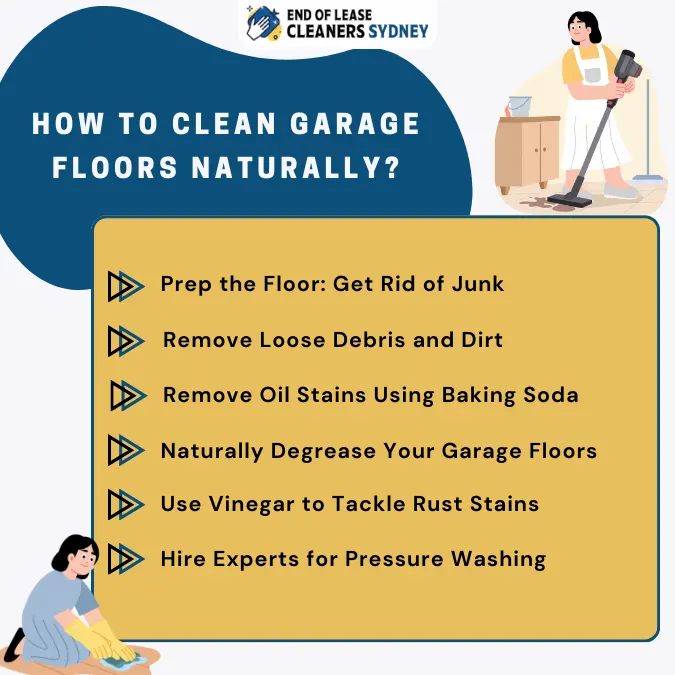
Infographic: How to Clean Garage Floors Naturally?
Wrapping Up
These are some of the best DIY methods to remove oil stains, buildup grease, grime and paint stains from garage floors. Make sure you act on spills immediately and tackle stains using all natural cleaning products to protect its pristine shine