A successful move out experience starts with proper cleaning, clear communication and knowing your tenant's rights. While many tenants put significant effort into preparing their rental property before vacating; disagreements over cleanliness can still arise during the final inspection. From dusty corners to overlooked kitchen appliances; even small issues may lead to landlords rejecting the cleaning and delaying the bond refund process. This can feel frustrating and stressful, especially when tenants believe they have done everything correctly.
However, a rejected inspection does not automatically mean losing your bond money. In most cases, the issue can be resolved with timely action, proper documentation and a clear understanding of your responsibilities as a tenant. This article will let you know what to do if your landlord rejects the bond cleaning. Whether it involves arranging a reclean or seeking help from guaranteed end of lease cleaning Sydney professionals; knowing the right steps can make the process smoother and help you secure your bond refund without unnecessary conflict.
- Understand Why the Cleaning Was Rejected
- Review Your Tenancy Agreement Carefully
- Communicate Calmly With the Landlord
- Arrange a Reclean if Necessary
- Gather Evidence and Documentation of the Property
- Know Your Rights as a Tenant
- Consider Mediation or Tribunal Support
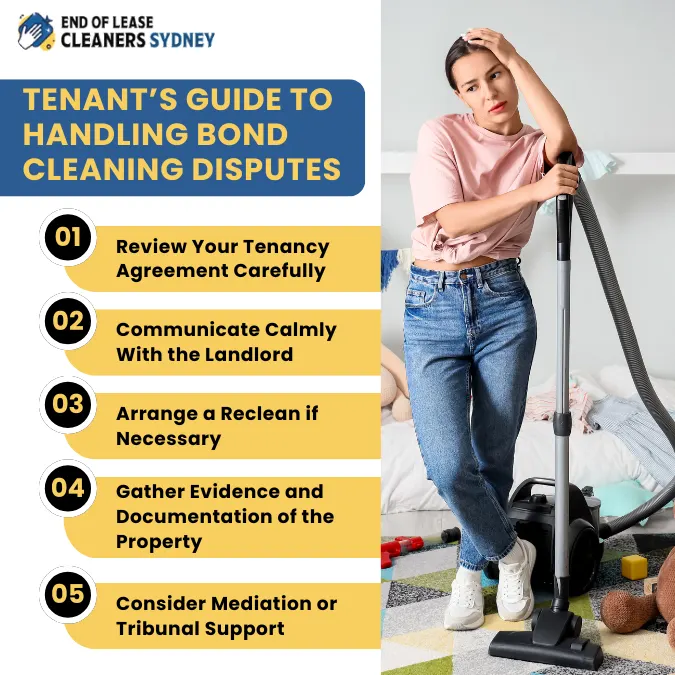
- Infographic For Tenant’s Guide to Handling Bond Cleaning Disputes
- Wrapping Up
1. Understand Why the Cleaning Was Rejected
The first thing you should do is carefully review the landlord’s concerns. Ask for a detailed explanation or inspection report that clearly outlines the areas that failed to meet expectations. Common reasons include stained carpets, dirty ovens, mould in bathrooms, dusty blinds or missed outdoor areas. Understanding the exact problem helps you avoid unnecessary confusion and gives you the chance to fix the issue properly.
It is also important to compare the landlord’s complaints with the original condition report completed when you moved in. Landlords cannot expect the property to be in better condition than it was at the start of the tenancy. Normal wear and tear, such as faded paint or worn carpets, is generally not the tenant’s responsibility. Reviewing these documents can help you determine whether the rejection is fair or excessive.
2. Review Your Tenancy Agreement Carefully

Your tenancy agreement often includes specific cleaning expectations that tenants must meet before vacating the property. Some agreements mention carpet steam cleaning, pest control or professional cleaning requirements. Reading the agreement carefully will help you understand whether you have fulfilled your obligations or missed any important conditions.
You should also check if the landlord recommended or required professional cleaners. If you hired a company for end of lease cleaning Sydney, keep all invoices and receipts ready. These documents can serve as proof that you made a genuine effort to meet the required standards. They may also help during disputes if the landlord claims the property was not professionally cleaned.
3. Communicate Calmly With the Landlord
Disagreements during the bond refund process can become stressful, so it is very important to stay calm and professional. Politely contact the landlord or property manager; ask why certain areas were rejected. Avoid arguing or blaming; as respectful communication often helps solve problems faster.
Try to discuss practical solutions instead of focusing only on blame. For example, you can offer to return and clean the missed areas or arrange for cleaners to revisit the property. Many landlords are willing to give tenants a second chance when they see cooperation and willingness to resolve the issue. A calm approach often prevents the dispute from escalating further.
4. Arrange a Reclean if Necessary
If the landlord’s concerns are reasonable, organising a reclean is usually the fastest solution. Go through the property checklist again and pay attention to often overlooked spots such as light switches, exhaust fans, window tracks, and inside cupboards. Small details can make a big difference during the final inspection.
If you previously hired professional cleaners, contact them immediately. Many companies offering end of lease cleaning Sydney provide a bond back guarantee or free reclean service within a specific timeframe. This means they will return to fix any missed areas without additional charges. Using this option can save both time and money while improving your chances of receiving the full bond refund.
5. Gather Evidence and Documentation of the Property
Proper documentation can protect you if the disagreement continues. Take clear photographs and videos of the cleaned property, especially the areas mentioned in the complaint. Make sure the images are well lit and dated if possible. Visual proof can be very useful in demonstrating the condition of the property after cleaning.
Keep copies of all communication with the landlord, including emails, text messages, inspection reports and cleaning invoices. If the matter reaches a tenancy dispute tribunal, these records can support your case. Evidence helps show that you acted responsibly and attempted to resolve the issue fairly.
6. Know Your Rights as a Tenant
Many tenants feel very pressured during bond disputes because, they are unsure about their legal rights. In Australia, landlords cannot unreasonably withhold a tenant's bond money. They should provide evidence; if they claim additional cleaning is required. Understanding local tenancy laws; can help you respond confidently, and avoid unnecessary deductions.
You can also contact your state’s tenancy authority for guidance if you believe the landlord’s demands are unreasonable. These organisations provide advice, mediation services and information about dispute resolution processes. Knowing your rights ensures that you are treated fairly throughout the inspection and bond refund process.
7. Consider Mediation or Tribunal Support
If both parties fail to reach an agreement, mediation may be the next step. Mediation services help tenants and landlords discuss the issue with the support of a neutral third party. This process is often quicker and less stressful than legal action and many disputes are resolved successfully through open discussion.
In serious cases, the matter may go to a tenancy tribunal. While this sounds intimidating, tribunals are designed to handle rental disputes fairly. Presenting your evidence, cleaning receipts and condition reports can strengthen your case. Most importantly, stay organised and factual when explaining your side of the dispute.
Infographic For Tenant’s Guide to Handling Bond Cleaning Disputes
Wrapping Up
Having your bond cleaning rejected can feel frustrating, especially after spending time and money preparing the property. Understanding the landlord’s concerns, reviewing your tenancy agreement, and arranging a reclean when necessary can make the process much smoother. Hiring reliable professionals can also reduce the risk of disputes and provide extra peace of mind during the move out process.