When a tenancy ends, moving out can feel like juggling several duties. On the one hand, tenants want their bond returned without dispute, while landlords want to ensure their property is returned in good shape. To make the transition smoother, it is important for both parties to understand their respective duties.
End of lease procedures in Sydney are guided by clear rules under tenancy laws. However, there is sometimes confusion over who is responsible for cleaning, repairs, or general maintenance. This article will let you know tenant vs landlord duties at end of lease. Knowing the difference can prevent unnecessary conflicts, save money and reduce stress. Here is what both sides need to handle when it comes to professional end of lease cleaning Sydney and related obligations.
1. Tenant’s Cleaning Responsibilities
Leaving the property, in the same condition as when they moved in excluding natural wear and tear is the tenant's main duty at the end of a lease. Vacuuming floors, wiping down surfaces, cleaning kitchens and bathrooms and ensuring that no garbage is left behind are examples of basic cleaning duties.
Tenants are also responsible for addressing any stains, marks or damage caused during their stay. If carpets have pet hair or stains, steam cleaning may be necessary. Likewise, grease buildup in the kitchen or mould in the bathroom must be dealt with. Hiring professional cleaners for end of lease cleaning Sydney is often the easiest way to guarantee the property meets inspection standards.
2. Landlord’s Responsibility for Fair Wear and Tear
While tenants must carefully clean the house; landlords cannot expect it to be returned in pristine shape. Normal wear and tear such as faded paint, worn carpet or minor scuffs on walls is not the tenant's duty. This is a key distinction under Sydney's tenancy regulations.
Landlords must also, keep the property in safe and habitable condition. That means that if appliances delivered at the beginning of the lease such as an oven or heater, stop working due to age or regular usage, the landlord is responsible for repair or replacement. Attempting to charge tenants for these difficulties during end of lease proceedings would be unfair and against the rules.
3. Handling Repairs and Maintenance of the Property
When it comes to repairs, the line between tenant and landlord responsibilities can blur. Tenants, are responsible for repairing any damage they cause whether deliberate or accidental. This could include repairing a damaged glass from a cricket ball or patching up holes in the wall from hanging decorations.
Landlords, on the other hand, should handle structural repairs and other non tenant related matters. The landlord is liable for plumbing leaks, faulty wiring, and a damaged roof. By addressing these concerns before a tenant leaves, landlords may ensure that the next renter moves into a well maintained home and avoid conflicts during the inspection.
4. Bond Refund and Final Inspection

The bond is usually the most discussed point at the end of a lease. After the tenant leaves, the landlord will perform a final inspection to compare the property's condition to the entry condition report. If the tenant fails to meet their cleaning or repair requirements, the landlord may seek to deduct the costs from the bond.
However, tenants do have rights. If they believe the deductions are unreasonable, they can take them to the NSW Civil and Administrative Tribunal (NCAT). To avoid disputes tenants ought to keep receipts for any professional cleaning or repairs done. Landlords should offer detailed evidence such as photos, when claiming deductions. Open communication, usually helps to resolve difficulties before they become more serious.
5. Benefits of Professional End of Lease Cleaning
Although renters can try cleaning themselves, there are several benefits to hiring experts for end of lease cleaning Sydney. Expert cleaners are aware, of the things that landlords and property managers look for while conducting inspections. They provide receipts as evidence of the job and cover every aspect from window tracks to oven degreasing.
Landlords can rest easy knowing that their property will be prepared for the next tenant without requiring extra work because tenants have engaged a professional service. Professional cleaners typically guarantee their work and adhere to industry standards which lowers the possibility of bond disputes. This facilitates the process of moving out for everyone.
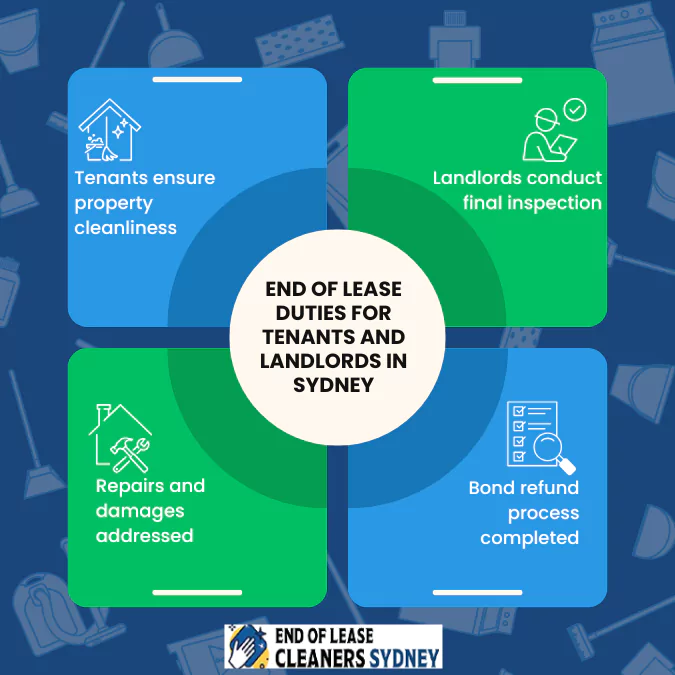
Infographic: End of Lease Duties for Tenants and Landlords in Sydney
Wrapping Up
The end of a lease, does not have to be a tense tug of war between renters and landlords. Understanding their respective duties allows both parties to make the process run more smoothly and avoid avoidable arguments. Tenants must assure complete cleaning and repair of any damages they made whereas landlords must accept reasonable wear and tear while maintaining the property's fundamental facilities. A fair, balanced approach benefits everyone concerned reducing tension at the end of a lease.