Keeping a home clean is not only about maintaining appearances. Many commonly used areas around the house collect bacteria, dust and grime every single day. These hidden hotspots can quickly become unhygienic if they are not cleaned regularly, especially in busy households where surfaces are touched constantly.
From kitchen counters to bathroom taps, germs usually spread through the areas we use the most. Here is a guide to cleaning the germiest hotspots at home. Whether you are maintaining a healthier living environment or preparing for a property inspection; paying attention to these spots is essential. Many professional services offering quality end of lease cleaning Sydney, focus heavily on these areas because they are usually the first places checked during inspections.
- Why Kitchen Surfaces Are the Germiest Spots in a Home?
- How to Properly Clean Bathroom Germ Hotspots?
- Why Door Handles and Light Switches Need Regular Cleaning?
- How Dirty Floors and Carpets Affect Home Hygiene?
- What Everyday Household Items Carry the Most Germs?
- Infographic: The Germiest Hotspots Cleaning Guide
- Wrapping Up
1. Why Kitchen Surfaces Are the Germiest Spots in a Home?
Kitchen countertops, cabinet handles, sinks and refrigerator doors are touched multiple times throughout the day, making them one of the biggest germ hotspots in any home. Food spills, grease and moisture can create the perfect environment for bacteria to grow, especially around cooking and washing areas. Even small crumbs and water splashes can lead to unpleasant odours and hygiene issues if left unattended for too long.
Cleaning kitchen surfaces daily with disinfectant sprays or warm soapy water can help reduce bacteria buildup. Microfibre cloths are useful because they remove dirt effectively without spreading germs around. Sponges and dishcloths should also be cleaned regularly since they often carry more bacteria than most kitchen surfaces. During end of lease cleaning, kitchens are usually deep cleaned carefully because landlords pay close attention to hygiene and cleanliness in this area.
2. How to Properly Clean Bathroom Germ Hotspots?
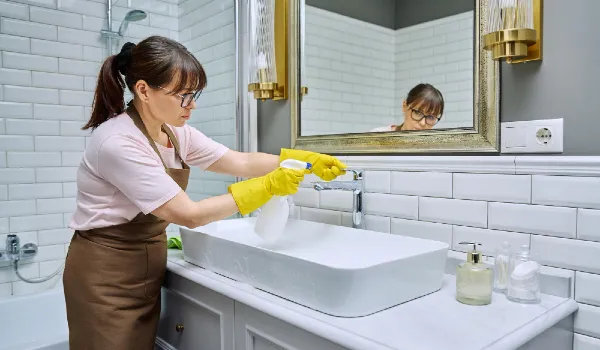
Bathrooms are naturally exposed to moisture, making them ideal places for germs, mould and mildew to thrive. Toilet flush buttons, sink taps, shower handles and bathroom floors can quickly collect bacteria if they are not disinfected regularly. Damp conditions also encourage mould growth, especially around tiles, shower curtains and drains.
Using bathroom disinfectants and scrubbing surfaces at least twice a week can help maintain a cleaner and healthier space. Keeping the bathroom ventilated by opening windows or using exhaust fans is equally important because it reduces excess moisture. Bath mats, toothbrush holders and shower curtains should also be cleaned frequently as they can collect hidden bacteria over time. A spotless bathroom is one of the most important parts of professional end of lease cleaning Sydney services because it strongly affects inspection results.
3. Why Door Handles and Light Switches Need Regular Cleaning?
Door handles and light switches are among the most frequently touched items in a house, yet they are often ignored during daily cleaning routines. Since everyone in the home uses them multiple times a day, germs can easily spread from one room to another through these surfaces. Remote controls, cabinet handles and mobile phones also collect a surprising amount of bacteria over time.
Wiping these surfaces with disinfectant wipes or alcohol based cleaners every few days can greatly improve household hygiene. Focusing on high touch areas such as bedroom handles, kitchen switches and television remotes can reduce the spread of germs around the home. These small cleaning habits only take a few minutes but make a noticeable difference in maintaining a cleaner living environment.
4. How Dirty Floors and Carpets Affect Home Hygiene?
Floors and carpets trap dirt, dust, pet hair and bacteria brought in from outside every day. Entryways are especially dirty because shoes carry mud, germs and outdoor pollutants directly into the home. Carpets can also trap allergens deep within the fibres, making regular cleaning essential for maintaining indoor air quality.
Vacuuming carpets weekly and mopping hard floors with disinfectant cleaners can help remove dirt and bacteria effectively. Using doormats and following a no shoe policy indoors can also reduce the amount of contamination entering the house. Professional cleaners handling end of lease cleaning Sydney often use deep cleaning methods for carpets and floors because these areas leave a strong impression during inspections.
5. What Everyday Household Items Carry the Most Germs?
Many everyday items at home collect germs because they are used often but cleaned less frequently. Cleaning these items regularly with disinfectant wipes or warm soapy water can help reduce germs and keep your home fresher. Adding these simple tasks to your cleaning routine can improve hygiene and make your living space healthier.
Some common household items that need regular cleaning are:
- Mobile phones
- TV remotes
- Computer keyboards
- Reusable shopping bags
- Laundry baskets
- Pet bowls
- Water bottles
- Keys and wallets
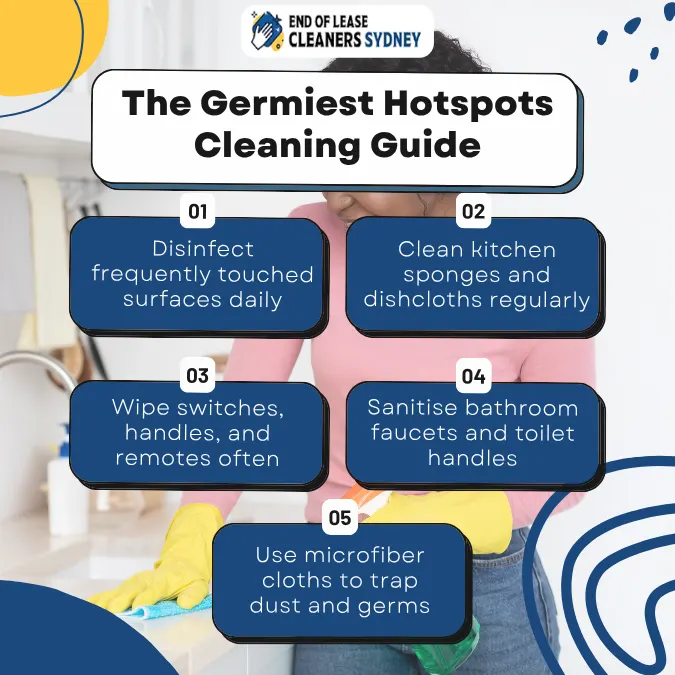
Infographic: The Germiest Hotspots Cleaning Guide
Wrapping Up
Cleaning the germiest hotspots at home is important for maintaining both hygiene and comfort. Areas like the kitchen, bathrooms, floors and frequently touched surfaces collect bacteria quickly and need regular attention to stay clean and safe. Ignoring these spots can lead to unpleasant smells, mould growth and poor indoor hygiene over time. Creating a consistent cleaning routine can make household maintenance easier and more effective.